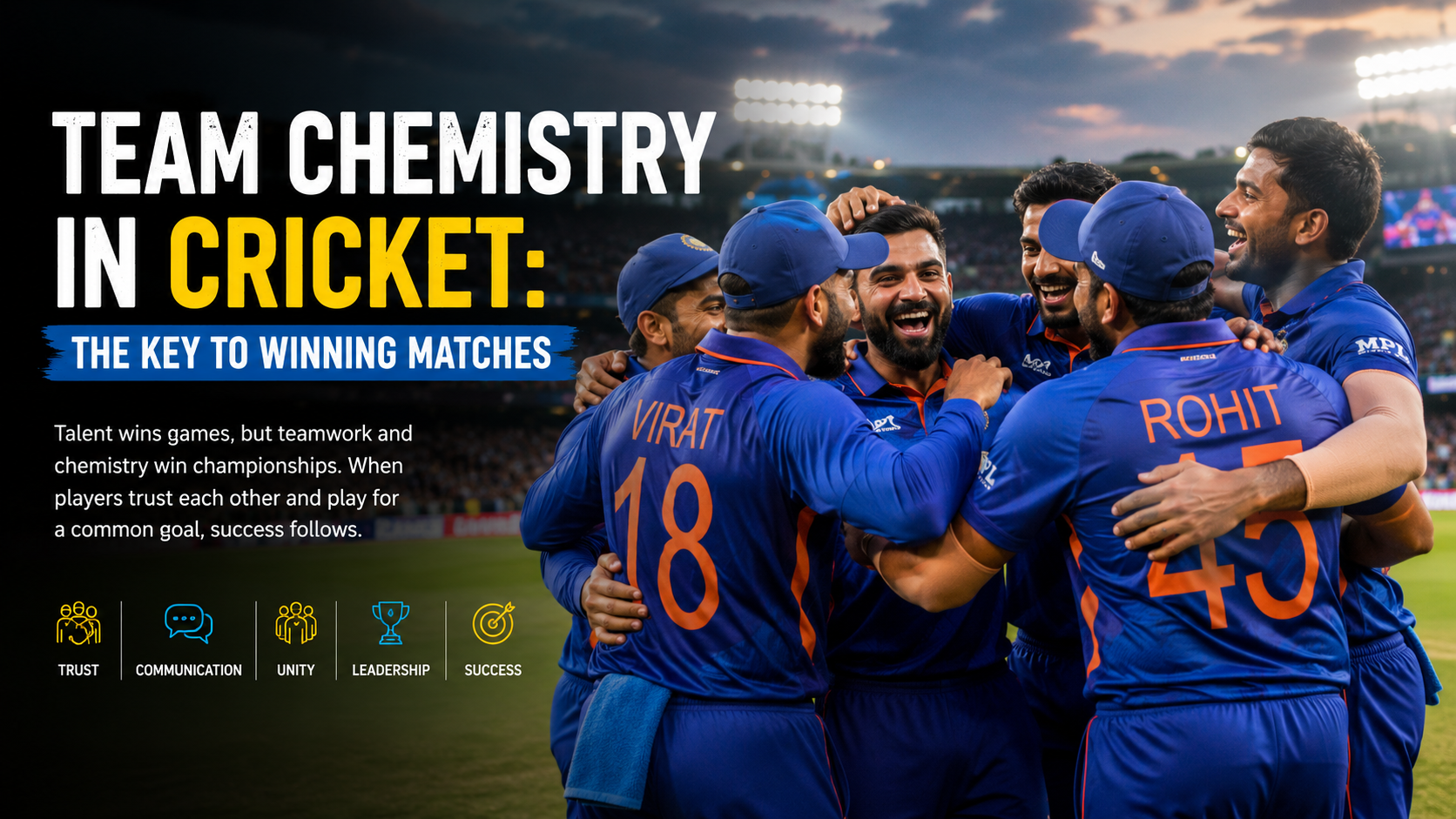
Team Chemistry in Winning Cricket Matches
Cricket is often described as a game of skill, strategy, and individual brilliance. However, when teams consistently win tournaments and dominate opponents, there is usually another factor working behind the scenes—team chemistry. While talent helps players perform, strong relationships, trust, and understanding among teammates often create the foundation for long-term success.
In modern cricket, team chemistry has become one of the most discussed aspects of winning teams. Whether it is an international side lifting a World Cup or a franchise winning a T20 league, players who trust each other and work towards a common goal often outperform teams that rely solely on individual stars.
What Is Team Chemistry in Cricket?
Team chemistry refers to the connection, trust, communication, and mutual understanding shared by players within a squad. It influences how players respond under pressure, support each other during difficult moments, and celebrate collective success.
A strong dressing room environment helps players stay focused on team objectives rather than personal milestones. When players understand their roles and trust their teammates, decision-making becomes quicker and performance becomes more consistent.
According to insights discussed in the article on team chemistry and elite sports, talent remains a crucial factor in success, but the best teams are those that successfully combine talent with the right personalities and team dynamics.
Why Team Chemistry Matters in Winning Matches
Better Communication Under Pressure
Cricket is a high-pressure sport where matches can change within a few deliveries. Effective communication between batters, bowlers, captains, and fielders often makes the difference between victory and defeat.
Teams with strong chemistry communicate naturally because players understand each other’s thinking patterns. This improves running between wickets, field placements, bowling strategies, and overall match awareness.
Increased Trust Among Players
Trust allows players to perform their roles confidently. A bowler is more willing to execute aggressive plans when he trusts his captain’s field settings. Similarly, batters take calculated risks when they believe their partners can support them.
This trust reduces fear of failure and encourages players to focus entirely on their responsibilities.
Stronger Team Resilience
Every successful cricket team faces setbacks. Injuries, poor form, and losing streaks are unavoidable. Teams with strong chemistry recover faster because players support each other emotionally and professionally.
Research and observations from successful sports teams suggest that winning cultures are often built on collective resilience rather than individual brilliance alone.
The Role of Healthy Competition
One of the most overlooked aspects of team chemistry is healthy competition. Many people assume competition creates division, but when managed correctly, it improves overall team performance.
A great example can be seen in discussions around Ryan Rickelton’s relationship with Rohit Sharma and the competitive environment involving Quinton de Kock. Instead of creating conflict, competition pushed players to improve while maintaining mutual respect and a shared goal of helping the team succeed.
Healthy competition creates:
- Higher performance standards
- Increased motivation
- Greater accountability
- Continuous skill improvement
The best teams encourage competition without allowing personal rivalries to damage team unity.
Leadership and Team Chemistry
Leadership plays a crucial role in building a positive dressing room environment. Successful captains and coaches understand that managing personalities is just as important as managing tactics.
Leaders create clarity regarding player roles, expectations, and team goals. When players know exactly what is expected of them, confusion decreases and confidence grows.
Cricket history is filled with examples of leaders who transformed teams by building trust, accountability, and a shared vision. Great leaders understand that every player contributes differently, but each contribution is equally valuable to team success.
Lessons from Successful Cricket Teams
Several successful cricket teams have highlighted the importance of unity and chemistry.
The Nelson Mandela Bay Giants’ success in the Mzansi Super League was frequently linked to team unity and a positive dressing room atmosphere. Their ability to maintain strong relationships and collective focus helped them remain competitive throughout the tournament.
Similarly, many championship-winning teams across international and franchise cricket have emphasized culture, trust, and collaboration as key ingredients behind their achievements.
Common traits found in successful teams include:
- Clear communication
- Mutual respect
- Shared responsibility
- Positive leadership
- Strong work ethic
- Commitment to team goals
These qualities often separate good teams from great teams.
Can Talent Alone Win Championships?
This question continues to divide cricket experts and fans.
Some argue that elite talent naturally produces victories. Others believe team chemistry is equally important. The reality lies somewhere in between.
Talent wins moments.
Team chemistry wins seasons.
A squad filled with world-class players may win individual matches, but sustained success usually requires players to work together effectively. The strongest teams combine exceptional talent with strong interpersonal relationships, creating an environment where players consistently perform at their best.
Building Team Chemistry in Modern Cricket
Modern teams invest significant resources into strengthening team culture. Activities such as leadership workshops, team-building sessions, shared training experiences, and open communication channels help create stronger bonds among players.
Teams also recognize the importance of emotional intelligence. Understanding teammates’ personalities, motivations, and communication styles helps create a healthier and more productive environment.
As cricket continues to evolve, team chemistry is becoming an increasingly valuable competitive advantage.
Final Thoughts
Winning cricket matches is never about a single factor. Talent, skill, preparation, fitness, and strategy all play important roles. However, the difference between a good team and a championship-winning team often comes down to chemistry.
When players trust each other, communicate effectively, embrace healthy competition, and commit to a shared purpose, they create an environment where success becomes sustainable. Team chemistry may not always appear on the scorecard, but it is often the invisible force behind every great cricket victory.
FAQs
What is team chemistry in cricket?
Team chemistry refers to the trust, communication, understanding, and relationships between players that help them perform effectively as a unit.
Why is team chemistry important in cricket?
It improves communication, builds trust, strengthens resilience, and helps teams perform better during high-pressure situations.
Can a talented team succeed without good chemistry?
A talented team may win individual matches, but long-term success is usually achieved when talent is supported by strong team chemistry.
How does healthy competition improve team performance?
Healthy competition motivates players to improve, maintain high standards, and contribute more effectively to team goals.
What role do captains play in team chemistry?
Captains create clarity, build trust, manage personalities, and establish a culture that encourages teamwork and accountability.
Does team chemistry guarantee success?
No. Team chemistry alone cannot guarantee victories, but it significantly increases the chances of consistent success when combined with talent and preparation.
Leave a Reply