Cricket as a Global Sport
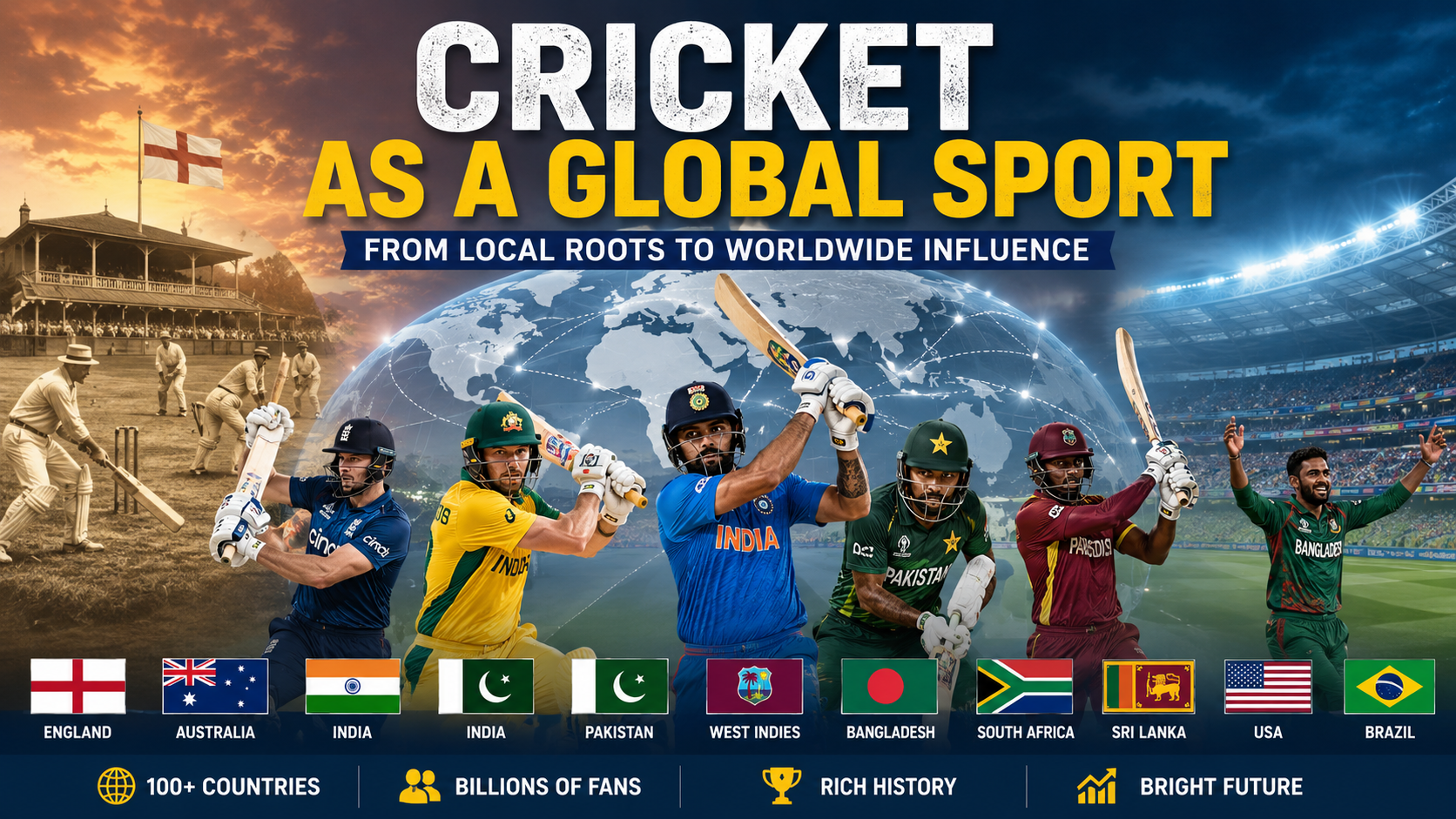
Cricket is more than just a sport; it is a cultural phenomenon that connects millions of people across continents. What began as a simple rural pastime in England has transformed into one of the most followed sports in the world. Today, cricket enjoys immense popularity in countries such as India, Australia, England, Pakistan, South Africa, Bangladesh, Sri Lanka, and the West Indies. At the same time, the sport is steadily expanding into emerging markets like the United States, Brazil, Germany, and Japan.
The journey of cricket from village fields to packed international stadiums highlights its remarkable ability to evolve while preserving its rich traditions. As the sport enters a new era of globalization, an important question remains: Is cricket becoming truly global, or is it increasingly dependent on a single dominant market?
The Historical Evolution of Cricket
According to the history of cricket, the game originated in southeast England during the 16th century. Initially played by children in rural communities, cricket gradually developed formal rules and organized competitions.
The 18th century played a crucial role in shaping modern cricket. The introduction of standardized laws, structured pitches, and governing bodies helped establish the foundation of the sport. During the British Empire’s expansion, cricket spread to colonies across Asia, Africa, the Caribbean, and Oceania.
By the late 19th century, international cricket had emerged with historic rivalries such as The Ashes between England and Australia. The formation of the International Cricket Council (ICC) further strengthened cricket’s global structure and paved the way for international tournaments.
Cricket’s Global Expansion
One of the main reasons behind cricket’s growth is its adaptability. The sport has evolved through multiple formats that cater to different audiences.
- Test Cricket offers tradition, strategy, and endurance.
- One Day Internationals (ODIs) provide a balanced format.
- Twenty20 (T20) cricket delivers fast-paced entertainment.
The rise of T20 cricket has significantly accelerated global interest. Franchise leagues such as the Indian Premier League (IPL), Big Bash League (BBL), Pakistan Super League (PSL), and Major League Cricket (MLC) have attracted new fans and increased commercial opportunities worldwide.
The ICC now includes over 100 member nations, demonstrating how cricket has expanded far beyond its traditional strongholds. Furthermore, cricket’s return to the Olympic Games at Los Angeles 2028 is expected to introduce the sport to entirely new audiences and strengthen its international appeal.
India’s Role in Modern Cricket
No discussion about global cricket is complete without mentioning India. Over the last two decades, India has become the financial and commercial center of the sport.
India contributes a significant share of global cricket viewership, sponsorship revenue, media rights income, and digital engagement. The IPL has emerged as one of the most valuable sports leagues in the world, attracting elite players from nearly every cricket-playing nation.
This dominance has generated both opportunities and concerns. On one hand, India’s investment has fueled cricket’s expansion and improved player earnings. On the other hand, many observers argue that excessive dependence on one market could create long-term imbalances within the global game.
Discussions among cricket fans increasingly focus on whether cricket is becoming too reliant on Indian audiences and financial power. Questions about revenue distribution, competitive balance, and global development continue to shape debates about the future of the sport.
Challenges Facing Cricket’s Global Growth
Despite its popularity, cricket faces several obstacles in achieving the same worldwide reach as sports like football and basketball.
Limited Geographic Reach
Although cricket commands massive audiences, its popularity remains concentrated in a relatively small group of nations. Many countries still lack strong domestic structures and grassroots programs.
Infrastructure Requirements
Unlike football, which requires minimal equipment, cricket demands specialized grounds, protective gear, and organized facilities. This creates barriers to entry in developing markets.
Financial Inequality
Revenue disparities between major cricket boards and smaller nations continue to grow. Wealthier boards have greater resources for talent development, coaching, and infrastructure.
Competition from Other Sports
In countries like Australia, England, and South Africa, cricket competes with football, rugby, basketball, and other sports for attention, sponsorship, and participation.
Emerging Markets and Future Opportunities
Despite these challenges, cricket’s future remains promising. Several emerging markets are showing encouraging signs of growth.
The United States has become a major focus area with the launch of Major League Cricket and the successful hosting of international tournaments. Brazil has also developed a rapidly expanding cricket community, particularly among women and youth players.
Digital streaming platforms, social media engagement, and shorter formats have made cricket more accessible than ever before. These innovations allow fans from non-traditional cricket nations to discover and follow the sport without geographical limitations.
Women’s cricket is another major growth driver. Increased investment, professional leagues, and greater media coverage have elevated the profile of female athletes and attracted new audiences globally.
Why Cricket Remains Unique
Cricket stands apart because it successfully blends tradition with innovation. Few sports can offer the strategic depth of a five-day Test match while also delivering the excitement of a three-hour T20 contest.
The sport creates unforgettable rivalries, passionate fan communities, and moments that transcend national boundaries. Whether it is an Ashes series, an ICC World Cup final, or a thrilling IPL match, cricket continues to unite people through shared experiences and national pride.
Final Thoughts
Cricket’s transformation from a rural English pastime into a global sporting force is one of the most remarkable stories in sports history. While challenges related to financial imbalance and geographic concentration remain, the game’s expanding footprint suggests a bright future.
India currently serves as the engine driving cricket’s commercial growth, but the sport’s long-term success will depend on broader international development. Emerging markets, women’s cricket, Olympic participation, and digital innovation all present significant opportunities for expansion.
If governing bodies can balance commercial success with global inclusivity, cricket has the potential to become one of the truly universal sports of the 21st century.
FAQs
Is cricket a global sport?
Yes. Cricket is played in more than 100 countries and has a strong following across Asia, Europe, Oceania, Africa, and parts of the Americas.
Which country has the biggest influence on cricket?
India currently has the largest influence due to its massive fan base, broadcasting revenue, and the success of the Indian Premier League (IPL).
Why is cricket not as popular as football worldwide?
Cricket requires more infrastructure, equipment, and time commitment than football, making global expansion more challenging.
How is cricket growing internationally?
Growth is being driven by T20 leagues, digital streaming, Olympic inclusion, women’s cricket, and expansion into emerging markets such as the United States and Brazil.
What is the future of cricket as a global sport?
The future looks positive, particularly with increasing investment in new markets, greater accessibility through technology, and cricket’s return to the Olympics in 2028.
Leave a Reply